Understanding Budget Surplus, Assets and Liabilities:
Wiki Article
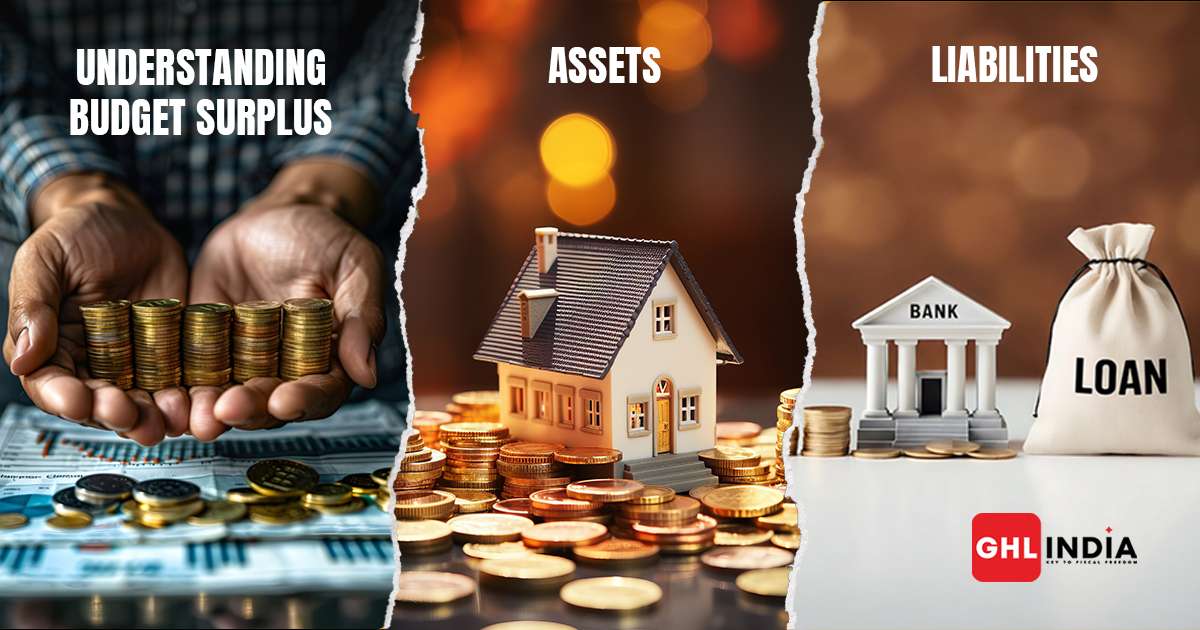
Arun had just started his first job. Like many young professionals, he felt proud the day his first salary was credited to his bank account.
For the first few months, everything felt exciting. Arun bought new clothes, upgraded his phone, ordered food online frequently, and enjoyed weekends with friends.
But something strange kept happening.
By the end of every month, his bank balance was almost zero.
Arun wondered, “I earn a decent salary… so why don’t I have any money left?”
The First Lesson: Understanding a Budget
One evening, Arun spoke to his uncle Ravi, who was known in the family for being good with money.
Ravi asked him a simple thing.
“Write down how much you earn and how much you spend.”
They listed everything.
Arun’s income was ₹45,000 per month.
His expenses included:
• Rent
• Groceries
• Transportation
• Online shopping
• Entertainment
After calculating everything, Arun realized he was spending around ₹37,000 every month.
Ravi smiled and said, “That means you have ₹8,000 left. This is called a budget surplus.”
A budget surplus simply means your income is more than your expenses. That extra money can be saved or invested.
Many people never create a surplus because they spend everything they earn.
The Second Lesson: Assets and Liabilities
Next, Ravi explained something even more important.
He drew two columns on a piece of paper.
One side was Assets.The other side was Liabilities.
Assets are things that can generate income or increase in value.
Liabilities are things that take money out of your pocket regularly.
For example:
Assets
• Investments
• Stocks or mutual funds
• Rental property
• Businesses
Liabilities
• Credit card debt
• Personal loans
• Car loans
• Expensive gadgets bought on EMI
Arun suddenly realized something interesting.
The phone he bought on EMI every month was actually a liability, not an asset.
The Third Lesson: Making Your Money Work
Ravi told Arun something that changed the way he thought about money.
“Your salary alone will not make you wealthy. Your assets will.”
The secret is to use your budget surplus to build assets that grow over time.
Instead of spending all his extra money, Arun could invest it into opportunities that might increase in value.
This is how many investors slowly build wealth.
A Real-World Example
Ravi explained that some companies focus specifically on turning undervalued opportunities into profitable assets.
One example is GHL India Asset, an investment and asset management company focused on a clear goal - turning undervalued land into high-value opportunities.
The company specializes in property flipping, a model where financially distressed residential and commercial properties are acquired, improved, and then sold to builders or developers at a profit.
In simple terms, they identify properties that are currently undervalued, enhance their value, and create profitable opportunities from them.
This type of strategy shows how experienced investors often look beyond the surface and focus on long-term value creation.
The Real Financial Mindset
By the end of the conversation, Arun understood something important.
It is about understanding budget surplus, assets and liabilities and using that knowledge to make better financial choices.
It depends on three simple habits:
• Creating a budget surplus
• Avoiding unnecessary liabilities
• Using surplus money to build assets
When these habits are followed consistently, money slowly begins to work for you instead of the other way around.
Arun started setting aside part of his income every month and began learning about different investment opportunities.
And over time, he realized something powerful.
Wealth isn’t built overnight.
It’s built through small financial decisions made consistently over time.
Report this wiki page